Thermostat Truths: What You Need to Know About Heating Your Student Home
25 February 2026 • 7 min read
Too hot? Too cold? Either way, figuring out how the thermostat in your student house works is the key to heating your home until it’s just right.
As the UK’s market-leading student accommodation advertising platform and utility management service provider, at UniHomes we help thousands of students sort their utilities every year. That's why we've created this guide on everything you need to know about how thermostats and central heating work.
Read on to find out our top thermostat tips, tricks, and truths, so that you can learn how to use your thermostat for maximum comfort without wasting time and energy.
–
The basics:
- What is a thermostat? A control panel that sets the temperature for the central heating system.
- What is a smart thermostat? A thermostat that connects to the internet, letting you remotely adjust the temperature using an app on your phone.
- What is central heating? The system that heats your house, and all the components (like the pipes, radiators, boiler, and thermostat) involved.What is a thermostatic radiator valve (TRV)? A knob on a radiator that controls the temperature for each individual room.
- How do thermostatic radiator valves work? They detect what temperature the room is and adjust the radiator (by controlling the flow of water into the unit) until the room reaches the temperature that you set the valve to.
All you need to know about thermostats & central heating:
1. The thermostat sets the target temperature 🌡️
Listen. We’ve all been there; when it’s freezing outside and we just can’t seem to get warm, it’s way too tempting to sneak over to the thermostat and turn it up to 30 degrees in the hopes that it will make the house heat up faster. But that’s just not how it works.
So how do thermostats work then? We find that it’s helpful to think of thermostats as a way to achieve a temperature goal, not as a way to get an instant temperature boost. No matter what temperature you set your thermostat to, it’ll work at the same rate and keep heating for longer until it finally reaches the target temperature – meaning that if you set the thermostat to 30 degrees, you and your housemates will just end up sweating in the long run.
While you do wait for your student house to heat up after turning on the central heating (to a sensible temp, no doubt), focus on warming yourself up by wrapping up in your dressing gown or bundling up in some blankets. Close doors to rooms to stop warm air escaping, and if hot drinks are your cup of tea, make yourself one in your favourite mug while you wait for the temperature to get to the right point. You’ll find yourself warming up in no time!
2. Leave the windows alone in winter 🙅♀️
Don’t get us wrong; it’s absolutely worth opening your windows for 5 minutes every day to air out your student home. Opening your windows for a bit can help prevent the buildup of condensation and mould (and, let’s be real, all the weird smells that come with sharing a student house).
But opening your windows because you’re too warm? Bad idea. To put it simply, it’s not a very sustainable or energy-efficient way to cool yourself and your surroundings down; you’re effectively wasting energy by letting out all the hot air that your central heating system worked so hard to generate, and you’ll ultimately end up having to keep the heating on for longer to try and reheat your room.
We know that turning the thermostat down isn’t always possible when you live with housemates, so instead of opening your windows when your bedroom is too warm, try controlling the temp using your radiator…
3. Radiator valves give room-by-room comfort 🏠
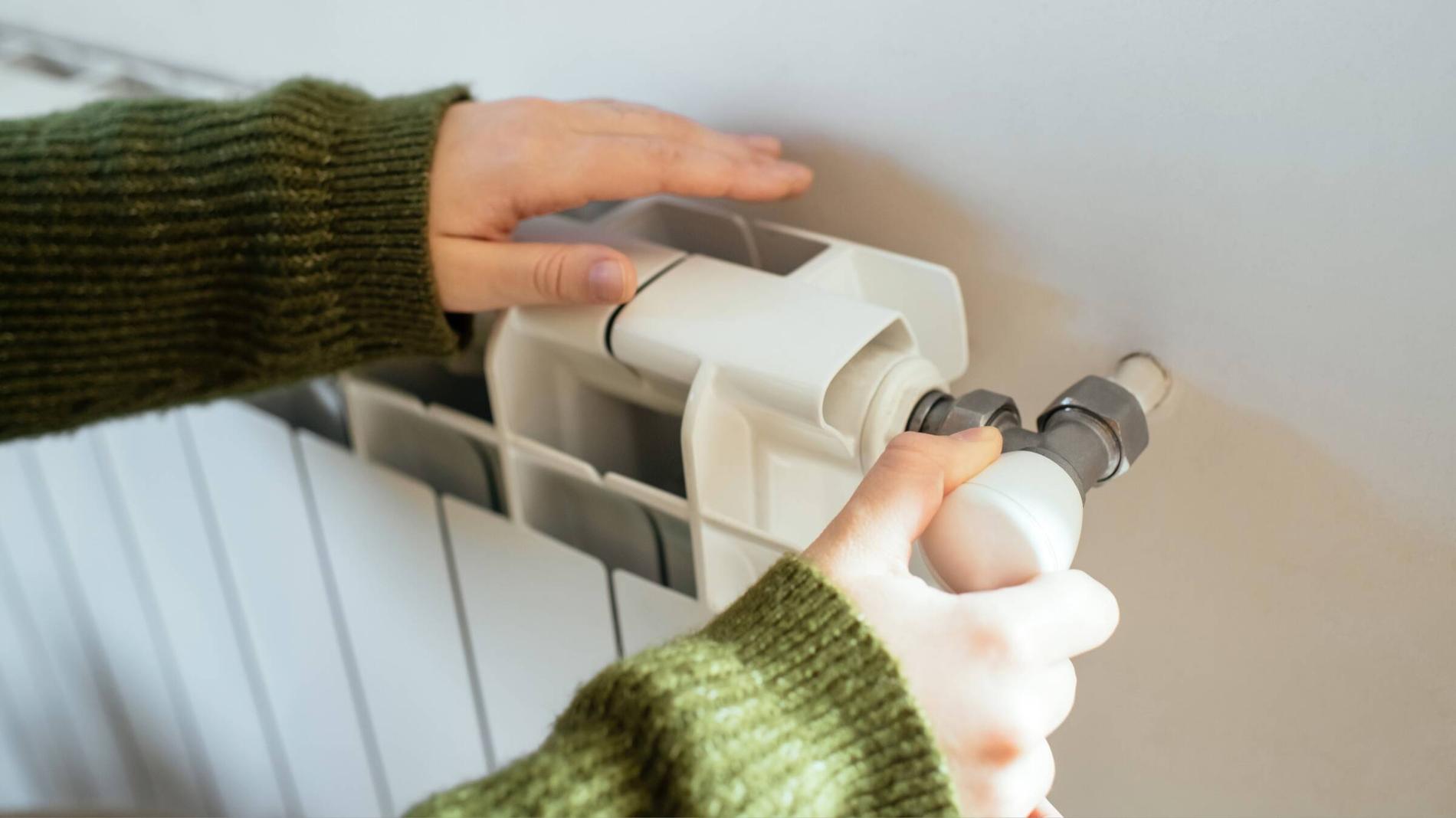
Thermostatic radiator valves (or TRVs) are great for helping you be savvy with your heating. You’ll find them in most student houses, and they’re easy to identify; on each radiator in your home, you should be able to see a knob to the side of the unit. This is essentially how to turn your radiator on or off, as well as how to adjust the temperature of your room. The valve will have numbers on it, and you can turn it to set your preferred temperature for your room; set it to off or the lowest number if your room is too warm, or set it to closer to max for when you’re feeling chilly.
Here’s what temperature British Gas says that each number on the valve usually corresponds to:
- 1 = 10°C
- 2 = 15°C
- 3 = 20°C
- 4 = 25°C
- 5 = 30°C
Radiator valves only control the temperature for the room that they’re in, meaning that they’re great for when the rooms in your student house are naturally different temperatures. So if your housemate likes the thermostat to be at 21 degrees but your room runs a bit hotter than the rest of the house, you can just turn down your radiator so that everyone is happy and at their own optimal temperature.
If the radiator in your room has a manual radiator valve instead (which is a valve without any numbers that simply turns the radiator on or off), you can still use this to switch off your radiator if you get too hot! Just make sure you remember to turn it back on.
4. Stop underestimating the power of the thermostat timers ⏳
Let’s face it – it’s no fun waking up to a freezing cold student house or coming home from a lecture to a room that’s just as chilly as the outside. But keeping the heating on all day and all night to avoid situations like these just isn’t sustainable or energy efficient.
That’s where thermostat timers come in handy. If you and your housemates have regular uni schedules (so you know roughly when one's home), try setting your central heating to come on half an hour or so before the first person gets back, using the timer on your thermostat or boiler (provided your central heating system has a timer). This way, you’ll be greeted to a nice and toasty house that hasn’t been eating away at energy all day whilst you’ve been out! If you find it hard getting out of bed in the winter, you can even try setting the timer so it comes on thirty minutes before you wake up in the morning.
If you’re lucky enough to have a smart thermostat, you can use that to remotely set the central heating to kick in using your phone. This means that if you decide you want the heating to be on for when you get home from uni, you can sort that out yourself from the (almost) comfort of your lecture theatre.
To sum up:
- Setting your thermostat to a higher temp doesn’t make your house heat faster, it just makes your house too warm in the long run.
- Don't open your windows to cool down in winter – it wastes energy and means you have to keep the heating on for longer to warm back up.
- Radiator valves are an easy way to control the heating in individual rooms.
- Use the timer to set your heating to come on at certain times, so your home can heat up when you need it to without wasting energy.
Take the stress out of utilities with UniHomes
Sorting out utilities for your student house can be stressful, even after you master using the thermostat. Between keeping track of payment dates and providers and chasing up your housemates for their share, it can sometimes feel like it’s all more hassle than it’s worth.
Our UniHomes student bills packages make utilities simple again, by bundling your household bills into one easy monthly payment that’s split equally between housemates. We handle all the tricky bits for you so that you can be free to focus on uni, whether that’s studying or socialising.
All you need to do is send in regular meter readings to us – but don’t worry, our blog post on how to read your gas and electricity meters can help you figure out everything you need to know.